
Unloading
DDP Delivery Unloading Checklist: Who Handles What?
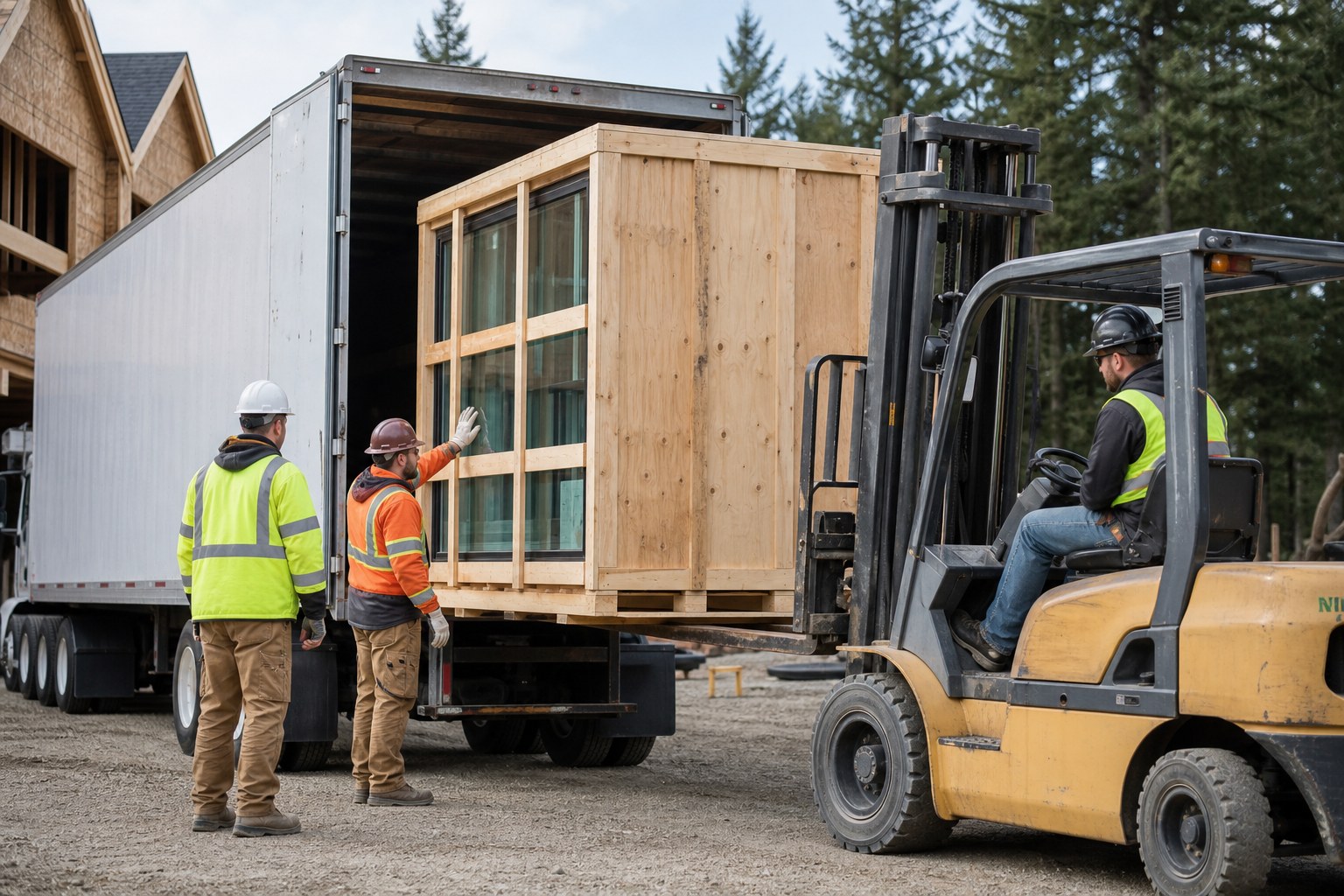
Quick answer: Under DDP, the seller generally handles transport and import formalities to the named destination, while the buyer unloads the arriving vehicle unless the contract includes unloading. Installation is not part of DDP. For large window and door crates, the order should assign truck access, equipment, qualified operators, labor, inspection, storage and installation explicitly.
The most expensive delivery misunderstandings happen in the final fifty feet. A shipment can clear customs and reach the correct address yet still fail because the truck cannot enter, no appropriate forklift is present, or no one is authorized to receive and inspect the crates.
| Scope | Confirm in writing |
|---|---|
| DDP transport | Incoterms® version, exact named destination and shipment-specific qualifications |
| Unloading | Party supplying equipment, operator, labor, unloading zone and appointment |
| On-site movement | Who moves crates beyond the delivery point and where they will be staged |
| Inspection | Authorized receiver, count, photographs, delivery notation and claim process |
| Storage | Protected location, handling restrictions and responsible party |
| Installation | Separate contractor, verified openings, approved information and site safety plan |
For the trade-term and customs overview, first read DDP Shipping for Windows and Doors. This article focuses on the final delivery point, unloading, on-site movement, storage and installation boundaries.
Separate five different scopes
- Transportation: moving the shipment to the named delivery point.
- Customs and duties: completing the agreed import process.
- Unloading: removing crates from the arriving vehicle.
- On-site movement and storage: taking crates from curb or unloading zone to protected staging.
- Installation: setting, anchoring, sealing, glazing, adjusting and integrating products into the building.
Only the first two are characteristic DDP obligations. The remaining work must be assigned in the quotation, formal order and local construction plan.
Confirm the named delivery point
Use a complete address and define whether delivery ends at a curb, driveway, dock, terminal or another accessible point. Photographs and site plans should disclose gates, slopes, surfaces, overhead obstructions, turning space, road restrictions, residential conditions and appointment requirements.
Select unloading equipment from crate data
Do not choose a forklift only from total weight. OSHA explains that capacity depends on load center, distribution and geometry. Long, wide or off-center crates can reduce effective capacity. Confirm crate dimensions, weight, center-of-gravity concerns, fork pockets, fork length, surface conditions and required reach with a qualified equipment provider.
Use trained people and a controlled area
Powered industrial trucks require trained operators under applicable workplace rules. Establish an exclusion zone, use a spotter when visibility requires it, stabilize the delivery vehicle and keep people away from unsupported loads. The site safety professional and equipment provider should determine the project-specific procedure.
Inspect before signing
Before arrival, review how the units are identified and protected in the international window and door packaging guide. The packing list, shipment documents and agreed claim procedure remain the authority for the actual delivery.
The receiver should count crates, compare marks with the packing list and inspect exterior condition while the shipment is still on the vehicle where practical. Photograph all sides and note visible damage or shortages on the delivery document before the driver leaves. A clean signature can make later transit claims harder to establish.
Plan storage and installation separately
Crates need stable, level and protected storage that preserves orientation and ventilation requirements. Installation requires verified openings, approved drawings, anchors, flashing, sealants, shims, lifting methods and qualified labor. The manufacturer may supply instructions and remote product guidance, but the local installer controls actual building conditions.
Put these responsibilities in writing
- Named DDP destination and allowable vehicle
- Delivery notice and appointment process
- Party providing forklift, crane, rigging, operator and spotter
- Crate weights, sizes and lifting points
- Safe unloading zone and site-access readiness
- Receiver authorized to inspect and sign
- Damage notation and claim deadline
- On-site storage and installation contractor
Frequently asked questions
Does “door-to-door” mean inside the building?
No. It describes transportation, not placement inside the structure. Define the exact delivery point.
Will the truck bring a forklift?
Do not assume so. Large crates often require equipment arranged by the buyer or contractor.
Can the driver help install the windows?
Installation is a separate professional construction scope and should not be expected from a freight driver.
Resolve the final fifty feet before ordering
MERUZY documents the confirmed DDP delivery scope while the local team prepares unloading and installation. Review how delivery responsibilities are coordinated or request a quotation.
Builder path — Stage 8 — Plan delivery
Use this when: a written DDP proposal exists and receiving, unloading, storage and installation interfaces must be assigned.
Output: A named responsibility list and site-readiness plan for the final delivery point.
Next step: Review crate identification, protection and receiving evidence.
Have an active project? Send your plans, window schedule or opening information through the project quote form. Project quotations, proposed product drawings and revisions are free. MERUZY accepts custom supply projects from USD 3,000.
This article provides general information, not legal or safety advice. Follow the signed order, applicable regulations and qualified local safety planning.
Editorial review
Prepared for project education and reviewed for consistency with MERUZY’s current supply-only design, quotation and delivery process. Project-specific requirements are governed by approved documents and the formal order.
Reviewed by: MERUZY Project Coordination Team
Sources and further reading
QUESTIONS & DISCUSSION
Ask a question or add to the discussion
Have a question about this guide? Ask it here. The MERUZY team and other project professionals may respond.
Do not include private project information, addresses, drawings, pricing, order details, phone numbers or email addresses in your public comment.
Have a project to review?
Share your plans, rough dimensions, or schedules for a comprehensive DDP estimate and technical review.