
Windows
Thermal-Break Aluminum Windows: A Practical Buyer’s Guide
Thermal breaks reduce heat flow through aluminum frames, but frame design is only one part of window performance. Learn how US project teams should compare whole-product ratings, glazing, condensation resistance, size, operation and installation details.
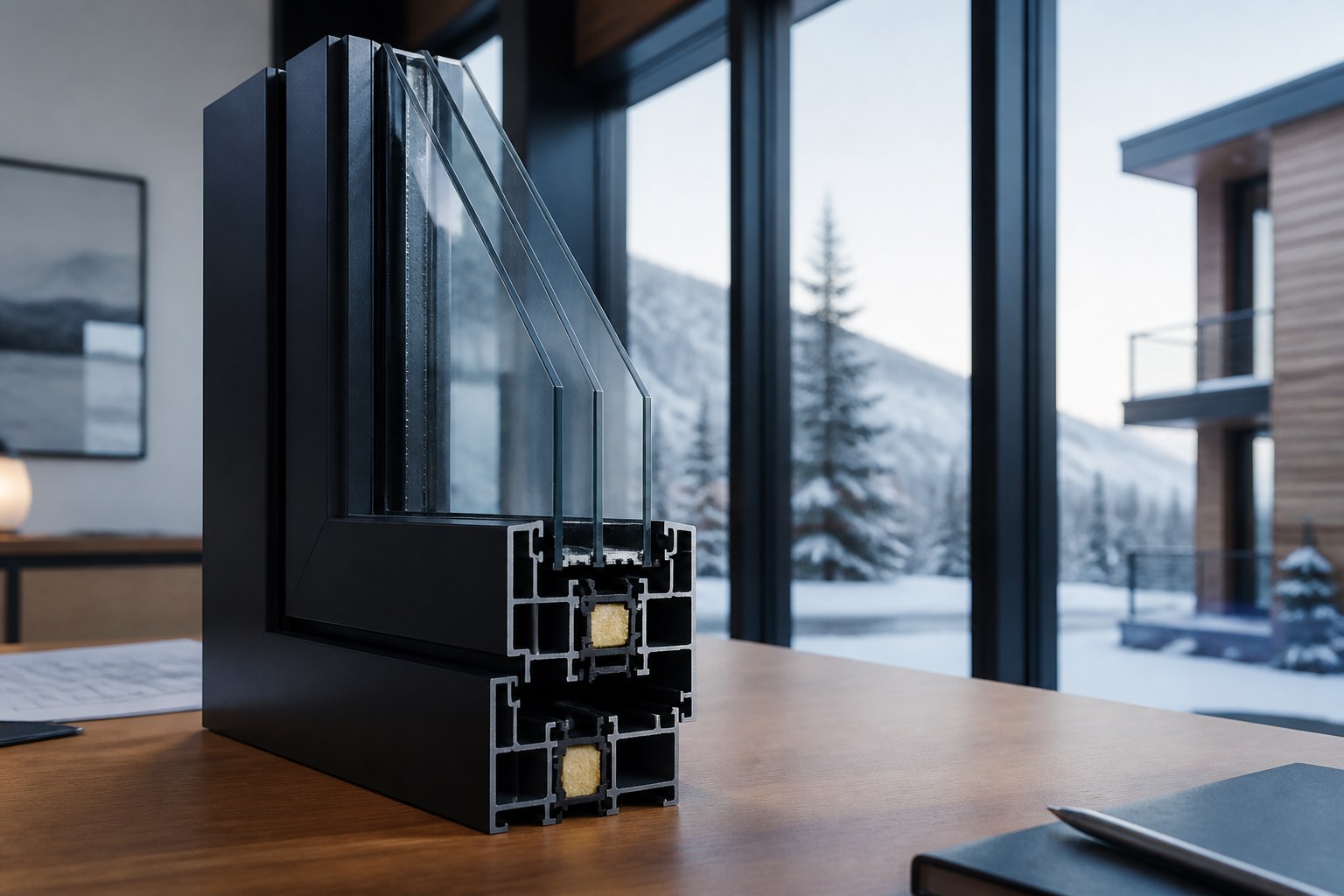
Quick answer: A thermal break is a low-conductivity element separating interior and exterior portions of an aluminum frame. It reduces direct heat flow through the metal, but it does not determine window performance by itself. Buyers should compare the complete proposed unit—including frame, glass, spacer, size, operating type and installation interface—using documentation applicable to that configuration.
Aluminum is strong, durable and well suited to large openings and narrow architectural sightlines. It also conducts heat readily. A properly designed thermal break interrupts that conductive path, helping the frame perform better in heating and cooling conditions. The phrase “thermal break,” however, is a construction description rather than a guaranteed performance number.
How a thermal break works
In a thermally broken profile, the exterior aluminum portion is separated from the interior portion by an insulating element, commonly a polyamide-based strip or another engineered barrier. Loads still must transfer through the assembled profile while thermal conduction is reduced. Profile depth, cavity design, corner construction, seals and fabrication quality all affect the finished system.
A painted line, gasket or thin surface layer is not automatically equivalent to a structurally integrated thermal break. Request a profile section and documentation for the actual system under consideration.
Compare whole-product U-factor
U-factor measures the rate of heat transfer through a fenestration product; lower values generally indicate better resistance to heat flow. Whole-product ratings account for both glazing and frame effects. Center-of-glass values are not interchangeable with whole-window values.
Ask whether the quoted result applies to the proposed operating type, dimensions, glass build-up and frame. Large fixed glazing, an operable window and a multi-panel door from the same family can have different results.
Do not ignore SHGC and visible light
Solar heat gain coefficient (SHGC) describes how much solar heat enters through the complete product. Lower SHGC can help reduce cooling loads in warm climates and on exposed orientations, while other projects may benefit from different solar-gain strategies. Visible transmittance affects daylight and appearance. Select these values with the project designer rather than asking for the lowest number in every category.
Condensation resistance is project-specific
A thermal break can raise interior surface temperatures, but condensation also depends on outdoor temperature, indoor temperature and humidity, glass edge conditions, air leakage, installation and local thermal bridges. No window can eliminate condensation under every indoor condition. Review the proposed assembly and manage indoor humidity appropriately.
Glazing and spacers matter
Insulating glass, low-emissivity coatings, gas fill, pane thickness, laminated or tempered layers, spacers and edge seals all influence performance. A high-performing frame paired with an unsuitable glass selection will not meet the intended result. Safety glazing and other requirements must also be coordinated by the qualified local professional.
Questions to ask before approving a system
- Is the quoted frame actually thermally broken, and can I review its section?
- Are performance values whole-product or center-of-glass?
- Do documents apply to this size, operating type and glass build-up?
- Which low-e coating, gas fill, spacer and safety-glass treatment are proposed?
- How are corners, mullions, sills and drainage assembled?
- What installation clearances, flashing and perimeter seals are required?
- Who confirms suitability for the climate and jurisdiction?
Installation can preserve—or undermine—performance
The opening should be square, plumb, level and properly supported. Anchors must suit the substrate and system, drainage paths must remain open, and perimeter air and water seals must connect to the building enclosure. Excessive fastener force or inadequate shimming can distort a frame and affect operation. Follow approved project details and manufacturer instructions.
Frequently asked questions
Are all aluminum windows thermally broken?
No. Confirm the profile construction rather than assuming from material or appearance.
Does a thermal break make aluminum suitable for every climate?
Not automatically. The complete product, project exposure, local requirements and installation must be evaluated.
Is triple glazing always required?
No. Pane count is one design variable. Compare the complete proposed assembly against project goals.
Review a project-specific configuration
MERUZY can coordinate thermal-break aluminum window options around your drawings, location, opening sizes and glazing priorities. Explore modern windows, review how the project process works, or request a free design and quotation.
Performance and compliance are configuration- and jurisdiction-specific. Final suitability must be confirmed from the approved product documents by the qualified local project team.
Editorial review
Prepared for project education and reviewed for consistency with MERUZY’s current supply-only design, quotation and delivery process. Project-specific requirements are governed by approved documents and the formal order.
Reviewed by: MERUZY Project Coordination Team
Sources and further reading
QUESTIONS & DISCUSSION
Ask a question or add to the discussion
Have a question about this guide? Ask it here. The MERUZY team and other project professionals may respond.
Do not include private project information, addresses, drawings, pricing, order details, phone numbers or email addresses in your public comment.
Have a project to review?
Share your plans, rough dimensions, or schedules for a comprehensive DDP estimate and technical review.